Ask any pool builder Marietta GA about the biggest challenge in Metro Atlanta pool construction, and the answer is universal: the soil. Georgia's distinctive red clay creates conditions that demand specialized knowledge and techniques.
This guide explains how Georgia soil affects pool construction and why experienced builders approach site preparation differently than contractors in other regions.
Understanding Georgia's Red Clay
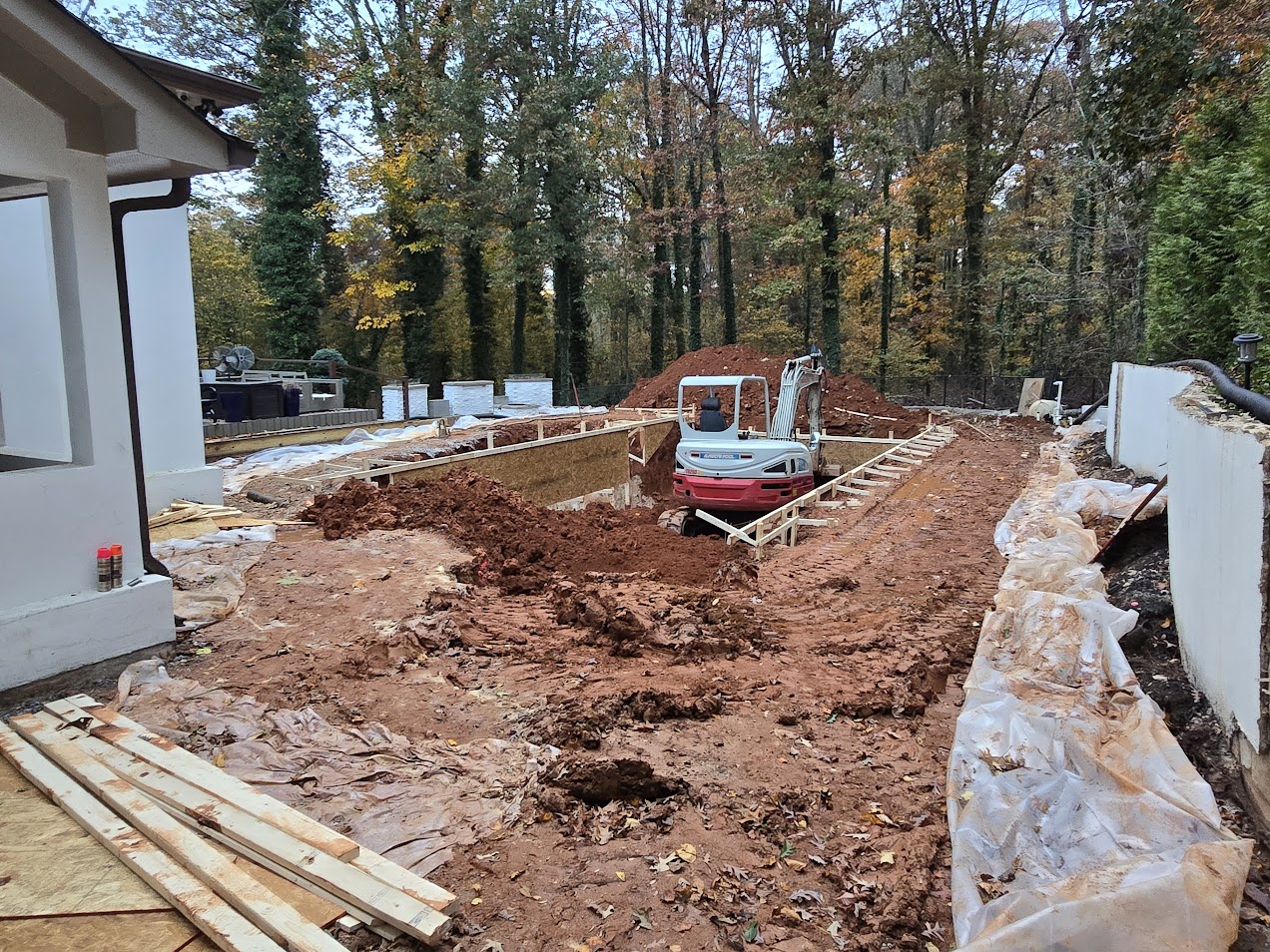
The iconic red-orange soil covering most of Metro Atlanta is not ordinary dirt. It is a specific soil type with properties that significantly impact construction.
What Makes Georgia Clay Different
Georgia's predominant soil is classified as "Cecil Series" clay, characterized by:
- High Clay Content: 35-60% clay particles by volume
- Iron Oxide: The red color comes from oxidized iron compounds
- Low Permeability: Water drains extremely slowly through clay
- Expansive Properties: Clay swells when wet and shrinks when dry
- High Plasticity: Becomes sticky and moldable when saturated
The Expansion-Contraction Cycle
Georgia's seasonal rainfall patterns create a continuous cycle:
- Wet Season (Winter/Spring): Clay absorbs water and expands up to 10%
- Dry Season (Summer/Fall): Clay releases moisture and contracts
- Cracking: Shrinkage creates surface cracks that extend deep into the soil
- Repeat: Next rain infiltrates through cracks, expanding clay further
This cycle exerts tremendous pressure on any structure in contact with the soil — including pool shells.
How Clay Soil Affects Pool Construction
Experienced swimming pool contractors Atlanta GA plan for several clay-specific challenges:
Lateral Pressure on Pool Walls
When saturated clay expands, it pushes against pool walls from all sides. This hydrostatic pressure can:
- Crack inadequately reinforced shells
- Push walls inward over time
- Damage plumbing penetrations
- Stress tile and coping installations
Shotcrete's high compressive strength and steel reinforcement resist these forces far better than vinyl or fiberglass alternatives.
Uplift Pressure on Pool Floors
When groundwater rises (common in Metro Atlanta's high water table areas), pressure builds under the pool floor. This can:
- Crack thin floor sections
- Pop fiberglass pools completely out of the ground
- Damage plumbing and main drains
- Create structural failures requiring major repairs
Uneven Settlement
Different areas of clay soil dry at different rates, causing:
- Differential settlement under pool decks
- Cracks in concrete flatwork
- Gaps between coping and decking
- Drainage problems from grade changes
Building a pool on Georgia clay?
White Glove Construction has decades of experience with Metro Atlanta soil conditions.
Site Evaluation: What Quality Builders Assess
Before breaking ground, professional pool builders in Georgia evaluate multiple site factors:
Soil Testing
While full geotechnical reports are not always necessary for residential pools, experienced builders assess:
- Soil Composition: Percentage of clay, sand, and organic material
- Compaction: How dense and stable the existing soil is
- Moisture Content: Current saturation level affecting excavation
- Rock Presence: North Metro Atlanta often has granite layers
Drainage Patterns
Understanding how water moves across and through your property:
- Surface drainage direction and collection points
- Neighboring property runoff patterns
- Existing drainage infrastructure (gutters, French drains)
- Low spots where water naturally collects
Water Table Depth
Seasonal water table levels vary significantly across Metro Atlanta:
- Higher Water Tables: Near rivers, creeks, and low-lying areas
- Seasonal Variation: Winter/spring levels often 2-4 feet higher than summer
- Perched Water: Clay layers can trap water above the main water table
Slope and Grading
Property topography affects construction approach:
- Hillside locations may require retaining walls
- Flat lots need careful drainage planning
- Existing grades may need modification for proper pool placement
Excavation Strategies for Georgia Clay
Proper excavation technique is critical in clay soil conditions:
Timing Considerations
Experienced pool construction Marietta GA contractors time excavation carefully:
- Best Conditions: Late summer/early fall when clay is driest
- Avoid: Excavating saturated clay in winter/spring if possible
- Weather Monitoring: Schedule around rain forecasts
- Quick Progression: Move from excavation to shell quickly to avoid water accumulation
Over-Excavation
In problematic soils, builders may excavate beyond the pool shell dimensions:
- Removes unstable or organic soil
- Allows installation of drainage systems
- Provides space for structural backfill
- Creates buffer zone around the shell
Dewatering
When groundwater enters the excavation:
- Sump pumps remove standing water
- Well points lower the water table temporarily
- Continuous pumping may be needed during shell construction
- Proper disposal of pumped water is required
Drainage Solutions for Metro Atlanta Pools
Effective drainage is essential for long-term pool performance in Georgia:
Subsurface Drainage
Pool builders in Alpharetta GA and throughout Metro Atlanta commonly install:
- French Drains: Perforated pipe in gravel trenches around the pool perimeter
- Drainage Mat: Fabric-wrapped drainage material behind pool walls
- Sump Systems: Collection points that can be pumped if needed
- Hydrostatic Relief Valves: Allow groundwater into the pool rather than lifting the shell
Surface Drainage
Proper grading prevents surface water from reaching the pool structure:
- Minimum 2% slope away from pool in all directions
- Deck drains collect and redirect water
- Swales direct runoff around the pool area
- Connection to storm drainage or dry wells
Gutter and Downspout Management
Roof runoff is a major water source that must be controlled:
- Downspouts extended away from pool area
- Underground piping to remote discharge points
- Rain gardens or dry wells for absorption
- Never discharge roof water near pool excavation
Backfill Requirements in Clay Soil
What goes back around the pool shell matters as much as the shell itself:
Proper Backfill Materials
- Gravel/Crushed Stone: Allows water to drain rather than build pressure
- Sand: Used in specific applications for smooth compaction
- Clean Fill: Native soil only if properly compacted
- Never Use: Organic material, construction debris, or expansive clay directly against shell
Compaction Standards
Backfill must be compacted in lifts to prevent settlement:
- 6-8 inch lifts maximum
- Mechanical compaction required
- Moisture content must be correct for compaction
- Testing may be required for large installations
Regional Variations Across Metro Atlanta
Soil conditions vary significantly across the metro area:
North Fulton & Forsyth (Alpharetta, Johns Creek, Cumming)
- Often encounter granite bedrock
- May require rock excavation equipment
- Generally good drainage once through clay layer
- Higher elevations mean lower water tables
Cobb County (Marietta, Kennesaw, Acworth)
- Deep clay deposits common
- Variable water table depending on location
- Some areas have significant rock
- Drainage planning critical on flat lots
Cherokee County (Canton, Woodstock)
- Mix of clay and rocky terrain
- Foothill properties may have complex drainage patterns
- Springs and seeps common on hillsides
- May require extensive site preparation
East Cobb & North DeKalb (Dunwoody, Sandy Springs)
- Generally stable clay conditions
- Established neighborhoods have known soil behavior
- Mature trees affect soil moisture patterns
- Smaller lots require careful excavation access
Seasonal Timing for Georgia Pool Construction
Understanding Georgia's climate helps optimize construction timing:
Optimal Construction Windows
| Season | Pros | Cons |
| Late Summer (Aug-Sep) | Driest soil, easiest excavation | Heat stress on crews, peak demand |
| Fall (Oct-Nov) | Good soil conditions, moderate temps | Shorter days, holiday scheduling |
| Winter (Dec-Feb) | Contractor availability, potential pricing | Wet soil, freeze risk, curing challenges |
| Spring (Mar-May) | Ready for summer use | Wet conditions, high demand, scheduling tight |
Weather Contingency Planning
Quality pool companies Canton GA and throughout Metro Atlanta build weather delays into their schedules:
- Average 5-10 rain days per month in spring
- Each significant rain can add 2-5 days for soil drying
- Frozen ground stops excavation and shell work
- Extreme heat affects curing and crew productivity
Why Experience Matters in Georgia
Contractors from other regions often underestimate Georgia's soil challenges. Experienced Atlanta pool builders know:
Local Knowledge
- Which neighborhoods have specific soil issues
- Historic water table behavior in different areas
- Local permitting requirements for drainage
- Relationships with geotechnical engineers when needed
Proper Equipment
- Excavators sized for clay conditions
- Dewatering equipment on standby
- Compaction equipment for proper backfill
- Rock breaking capability when needed
Realistic Scheduling
- Weather contingencies built into timelines
- No promises that ignore soil realities
- Proactive communication about conditions
- Flexibility to adjust approach as needed
White Glove Construction: Georgia Soil Experts
As a premier pool builder Atlanta GA, White Glove Construction has built hundreds of pools in Metro Atlanta's challenging soil conditions:
Site-Specific Solutions
We evaluate every property individually and design drainage and structural solutions for your specific conditions.
Quality Materials
Our shotcrete shells exceed minimum thickness standards because we know Georgia's clay demands robust construction.
Drainage Excellence
We install comprehensive drainage systems that protect your investment for decades.
Local Expertise
Our crews have built pools throughout Marietta, Canton, Alpharetta, Kennesaw, Acworth, Roswell, and surrounding communities. We know this soil.
Concerned About Your Property's Soil?
Schedule a free site evaluation with White Glove Construction. We will assess your property and explain exactly how we will build a pool that performs for decades.
Request Your Site Evaluation