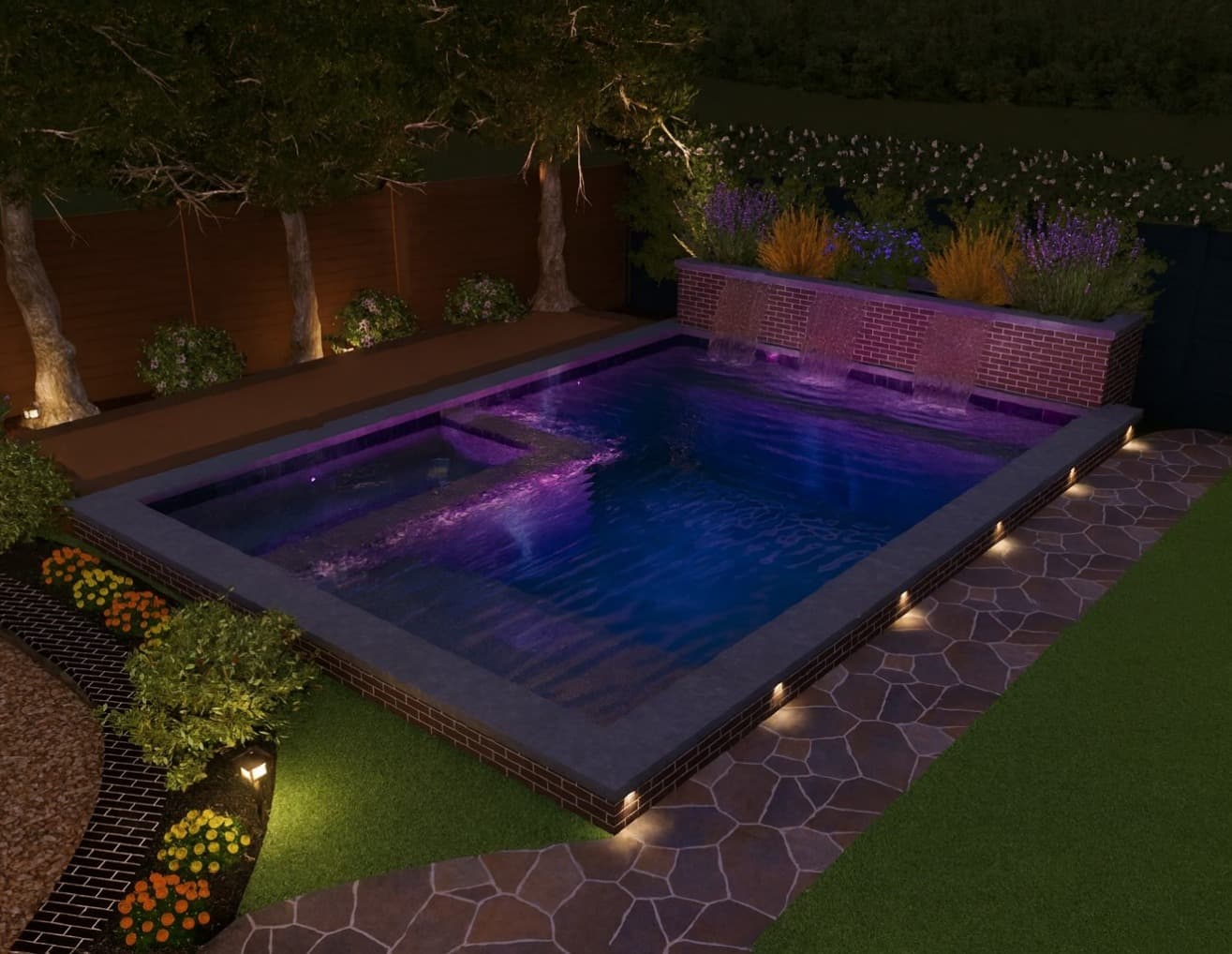
Most homeowners fall in love with the finished pool — the glass-smooth waterline tile, the cantilevered deck, the pergola throwing long shadows across the water at dusk. But the part that determines whether a pool still looks that good in twenty years is the part nobody sees: the shell.
On a recent build in Buckhead, we documented that shell coming to life. What follows is a look at shotcrete the way we think about it on the job site — not as a buzzword, but as the structural heart of a pool engineered to outlast trends, freeze-thaw cycles, and Georgia's notoriously moody clay soil.
What Shotcrete Actually Is (and Why It Isn't Just "Concrete")
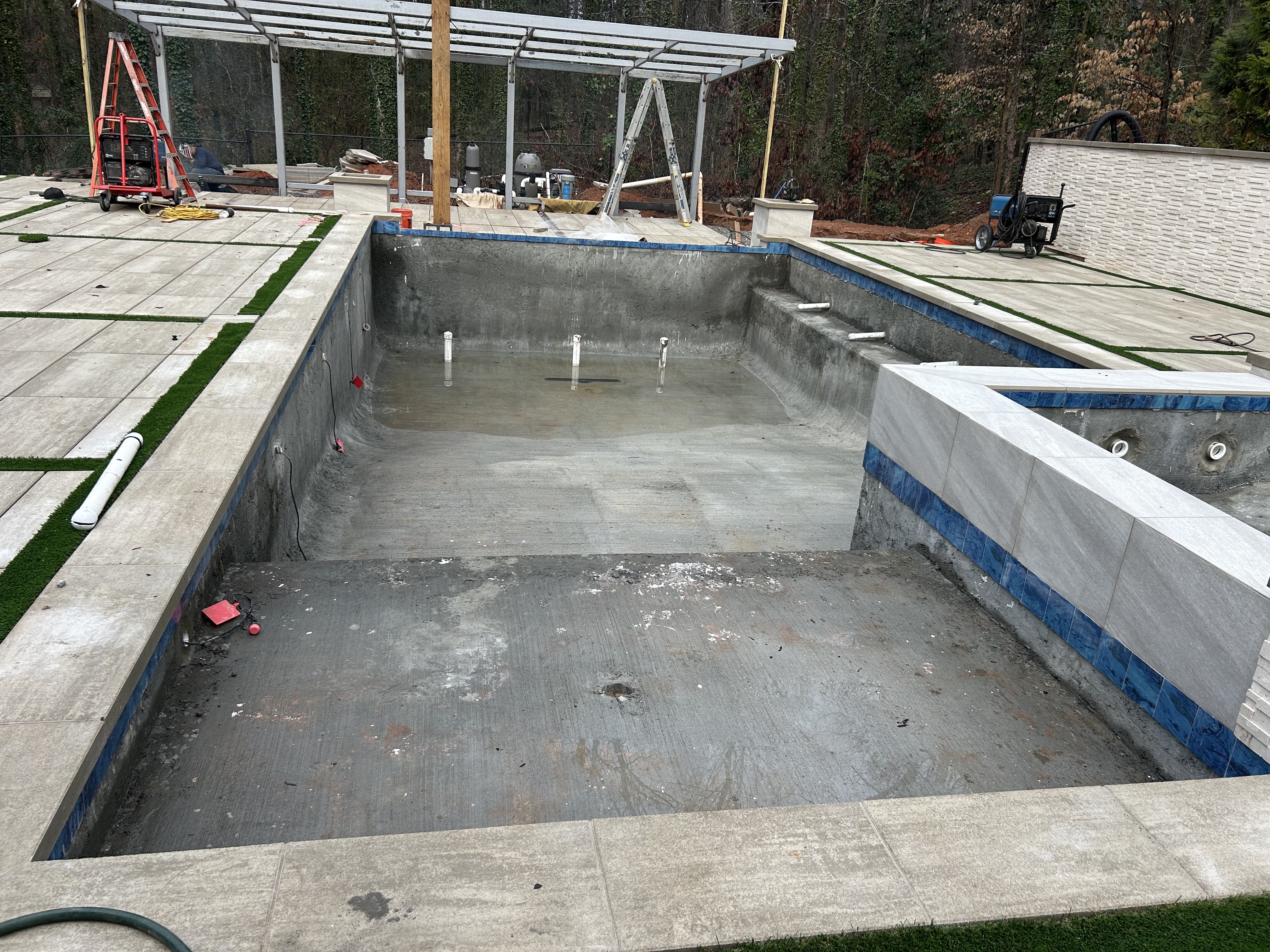
Shotcrete is concrete that's pneumatically shot from a hose at high velocity rather than poured into a mold. That single difference changes everything.
Because it's blasted into place under pressure, shotcrete compacts itself against the steel and the earth, eliminating the voids and cold joints that plague poured walls. The result is a dense, monolithic structure — one continuous mass of concrete and steel with no seams for water to exploit.
You'll hear two terms thrown around:
- Gunite — a dry mix where water is added at the nozzle
- Shotcrete — a wet mix batched with precise water content before it reaches the hose
We favor wet-mix shotcrete for its consistency. When the water-to-cement ratio is dialed in at the plant rather than guessed at the nozzle, you get a stronger, more predictable shell — and far less of the dusty rebound that gives dry gunite a reputation for waste.
It Starts With Steel, Not Concrete
Here's the thing people miss: shotcrete is only as good as the cage it surrounds. Before a single yard of concrete shows up, the entire pool exists as a three-dimensional lattice of reinforcing steel — a rebar skeleton tied by hand to follow every step, bench, and radius.
That cage is what gives the shell its tensile strength. Concrete is phenomenal under compression and weak under tension; steel is the opposite. Marry the two and you get a structure that resists the constant push-pull of hydrostatic pressure from the water inside and soil pressure from the earth outside.
In Georgia's expansive clay, that matters enormously. Our soil swells when it's wet and shrinks when it's dry, flexing against the shell year-round. A properly engineered steel cage is the difference between a pool that shrugs that movement off and one that develops hairline cracks by year five.
The Freedom to Build Any Shape
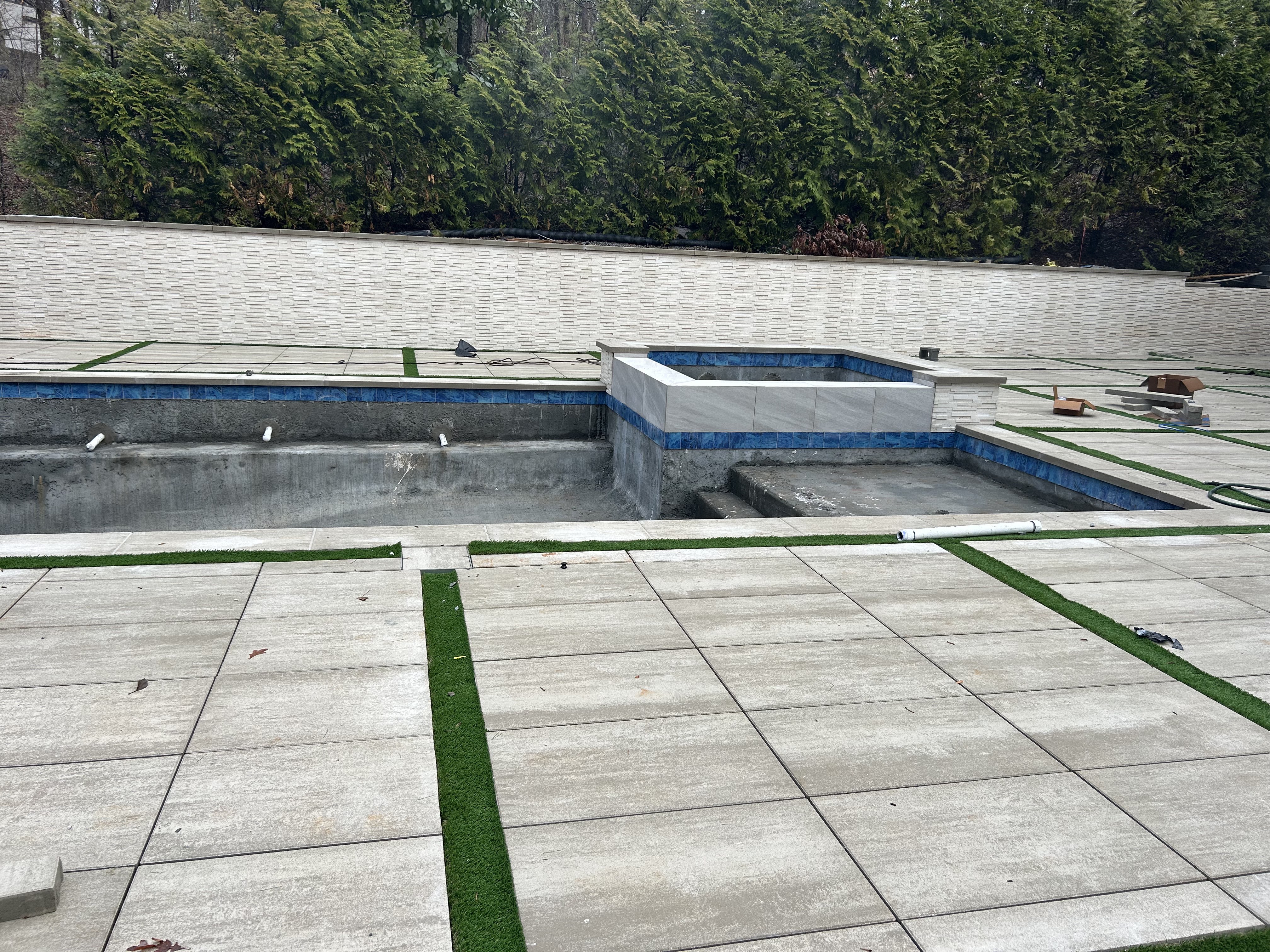
This is where shotcrete earns its keep as a designer's medium. Because it's sprayed and then hand-troweled, it can take on virtually any form — vanishing edges, raised spas, sun shelves, beach entries, curved benches, and spillways that defy the limits of pre-formed pools.
The raised spa on this Buckhead project is a perfect example. That elevated wall, the precise lip of the spillway, the seamless transition into the main pool — none of it could be done with a drop-in fiberglass shell or a vinyl liner. Shotcrete let us sculpt the spa as one continuous structural element, then dress it in glass tile once the shell had cured.
If you can draw it, a skilled shotcrete crew can usually build it. That's the creative ceiling vinyl and fiberglass simply can't reach.
The Cure Is the Quiet Hero
Once the shell is shot and carved, the most important phase begins — and it's the one that requires the most patience. Curing.
Concrete doesn't "dry"; it cures through a chemical reaction called hydration, and that reaction needs moisture and time. Rush it and the surface loses strength. So for the first week after the shoot, the shell gets watered down repeatedly, kept damp so the concrete can develop its full design strength.
A properly cured shotcrete shell can reach compressive strengths well beyond what the pool will ever experience in service. That over-engineering is intentional. It's the margin that lets the structure absorb decades of soil movement, water load, and seasonal swing without complaint.
Building Out, Not Just Down
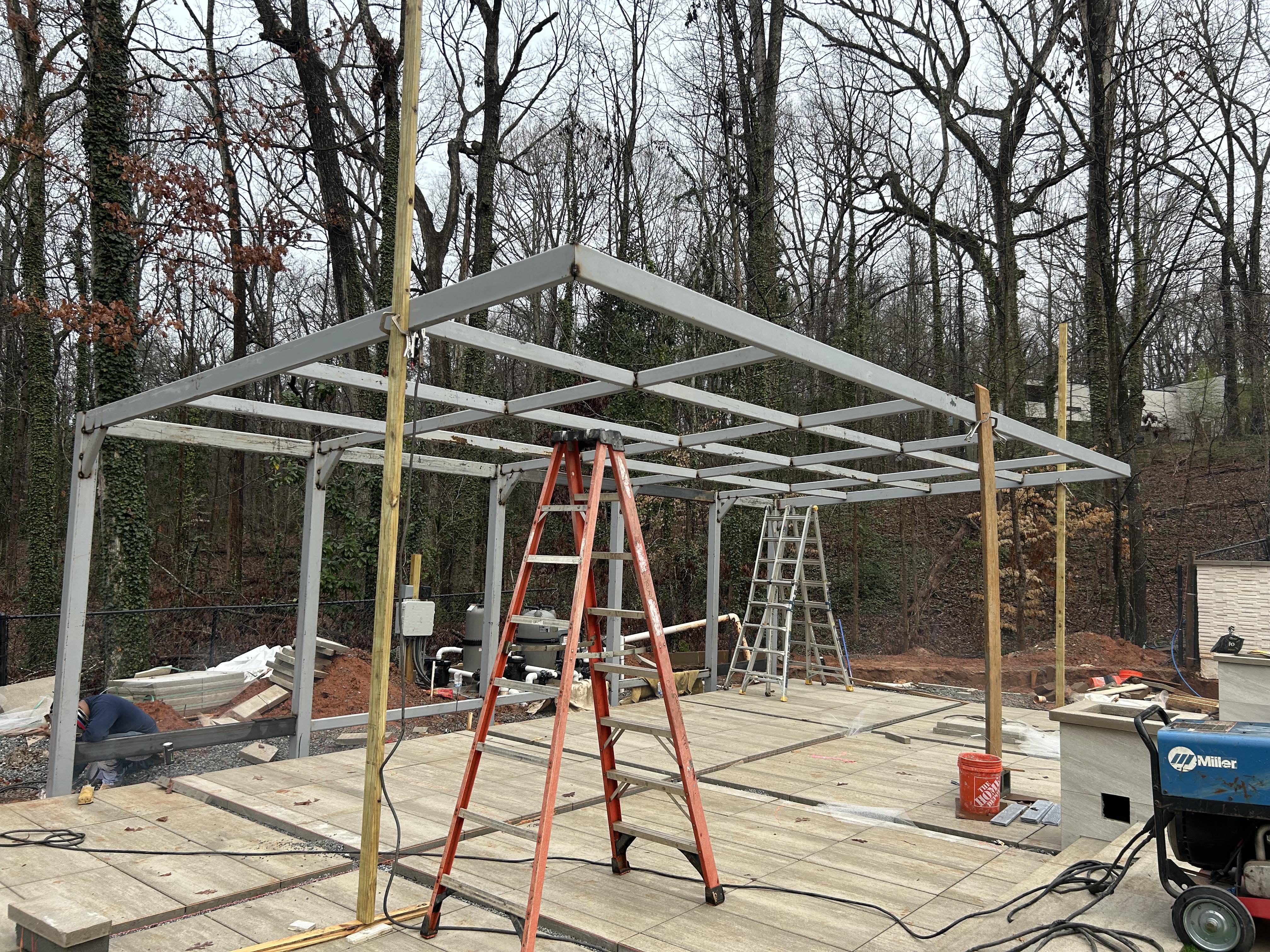
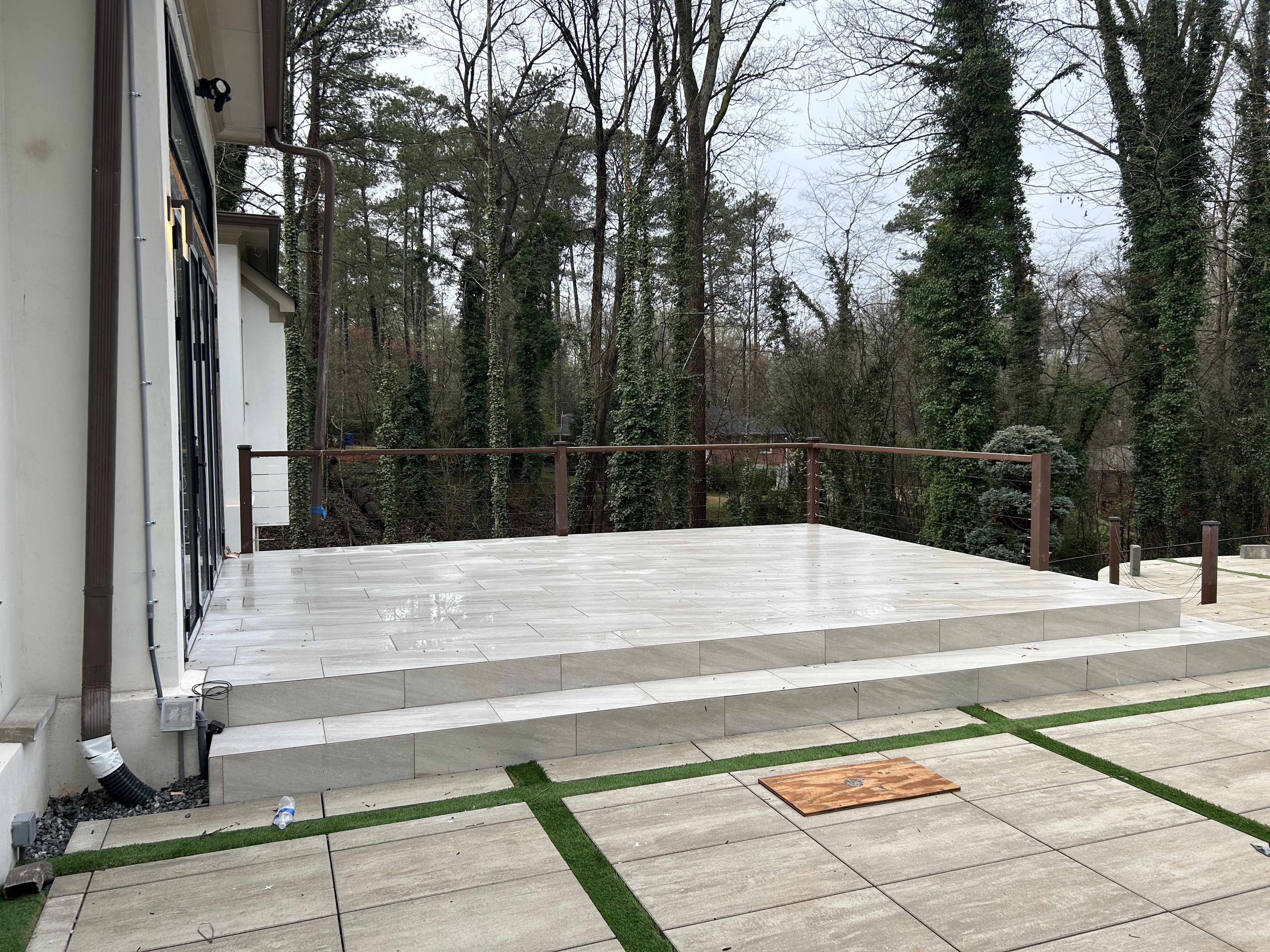
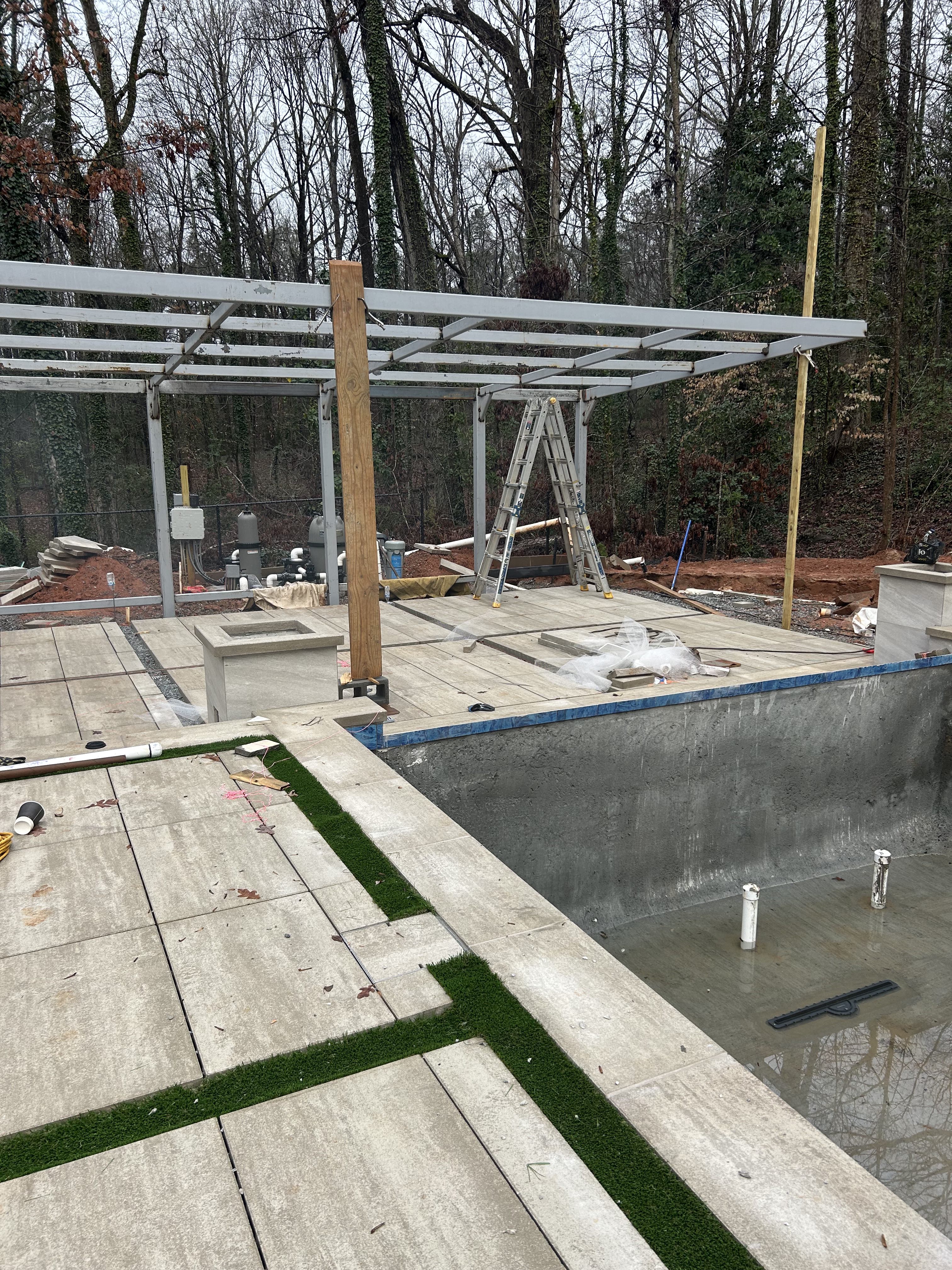
A shotcrete shell never lives in isolation. While the concrete cures, the rest of the backyard takes shape around it — and the sequencing is deliberate. On this project, the structural steel for the pergola went up alongside the deck framing so that the hardscape, shade structure, and pool all met on the same finished plane.
That coordination is invisible in the final photos, but it's the reason everything lines up: the coping sits flush with the deck, the spillway crowns at exactly the right elevation, and the pergola posts land precisely where the design intended rather than wherever was convenient.
Why It All Comes Back to the Shell
By the time the turf is laid, the pavers are set, and the pergola is throwing shade over the water, the shotcrete shell has disappeared entirely from view. But it's still doing the most important work on the property — holding tens of thousands of gallons of water against the relentless pressure of Georgia clay, day in and day out, for decades.
That's the quiet promise of a shotcrete pool. The beauty is what sells it. The structure is what keeps it beautiful.
Thinking About a Shotcrete Pool of Your Own?
Whether you're drawn to a raised spa, a vanishing edge, or a fully integrated outdoor living space, it all starts with a shell built the right way. White Glove Construction engineers and builds custom shotcrete pools across Buckhead, Atlanta, and the greater Metro area — designed for the soil they sit in and the families who'll enjoy them for years.
Ready to build something that lasts?
Request A Design Consultation