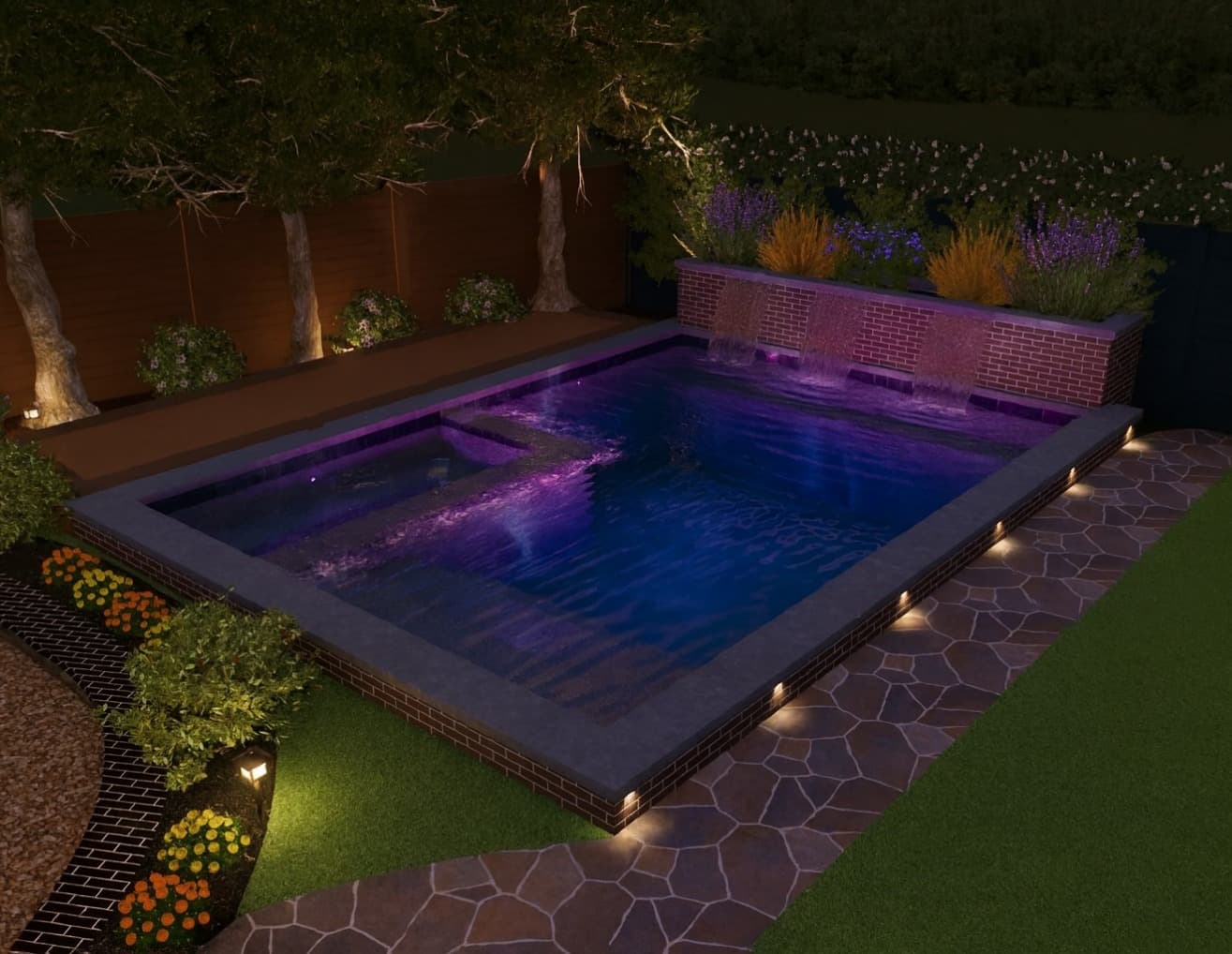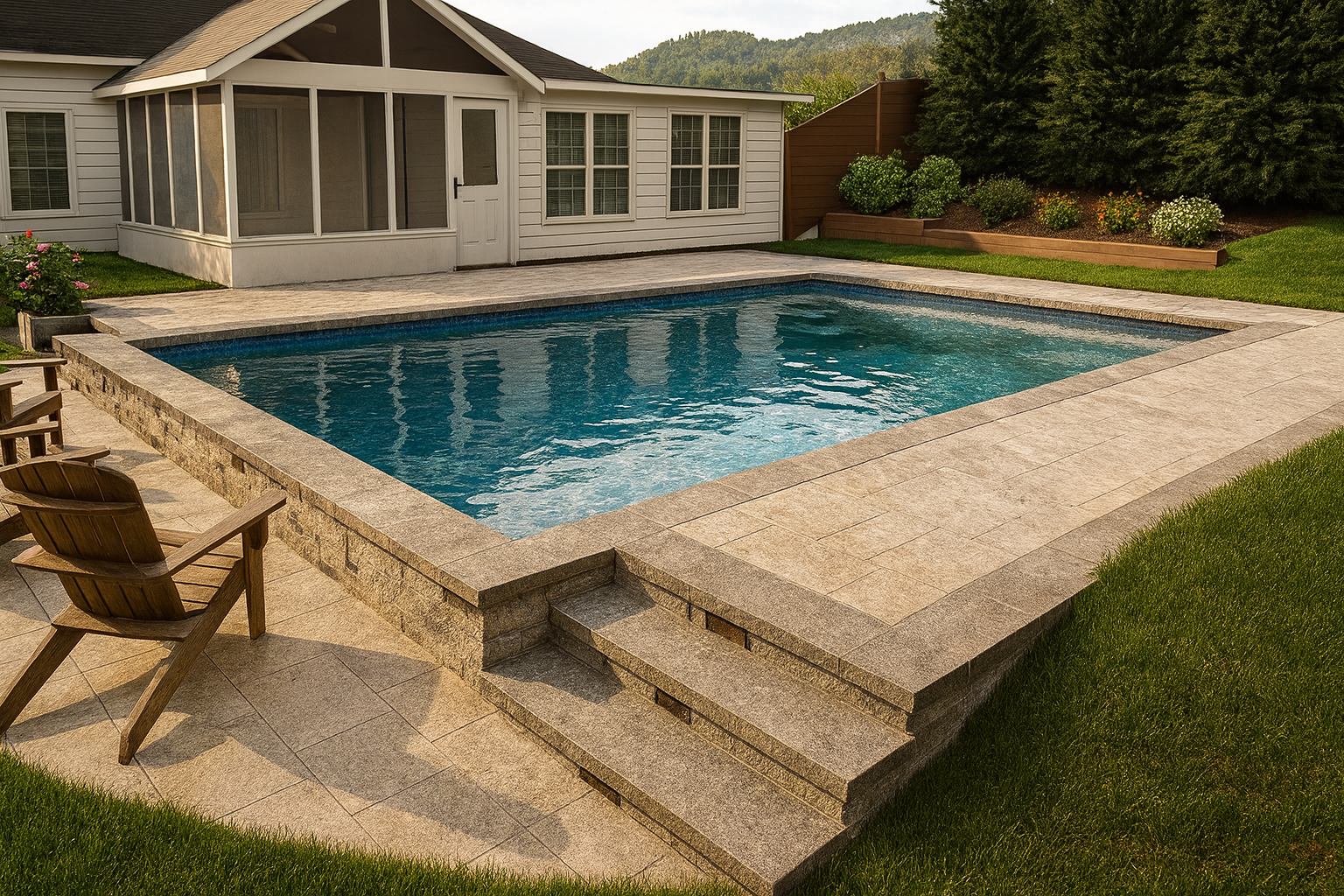
If you're researching custom concrete pools, you've probably heard the terms shotcrete and gunite used interchangeably. They're similar—but how they're applied matters, and choosing the right builder matters even more.
Below, we answer the most common questions homeowners ask us before building a luxury concrete pool in Georgia.
What is a shotcrete pool?
A shotcrete pool is a type of concrete pool where pre-mixed concrete is pumped through a hose and sprayed at high velocity onto a reinforced steel (rebar) framework.
Key characteristics:
- Concrete and water are mixed before application
- More consistent strength and density
- Excellent for complex designs and tight tolerances
- Commonly used in high-end residential and commercial builds
Shotcrete allows for precise application, which is why it's often preferred for luxury pools, spas, and architectural features.
What is a gunite pool?
A gunite pool uses a dry concrete mix that's blown through a hose, with water added only at the nozzle by the applicator.
Key characteristics:
- Requires a highly skilled nozzleman
- Strength depends heavily on application technique
- Can be slightly more forgiving in certain soil conditions
- Has been used successfully for decades
Gunite is still a proven method—but the margin for error is higher if the crew isn't elite.
Is one stronger than the other?
When done correctly, both can exceed structural requirements. The difference isn't the material—it's execution.
Shotcrete tends to produce:
- More uniform PSI
- Less rebound waste
- Fewer voids when properly placed
Gunite can match this—but only with top-tier craftsmanship.
Bottom line: A bad shotcrete crew will fail. A bad gunite crew will fail faster.
Which one lasts longer?
Longevity comes down to three non-negotiables:
- Rebar engineering
- Concrete application quality
- Curing process
A professionally built concrete pool—shotcrete or gunite—can last 50+ years when these are done correctly. If corners are cut, problems show up in 5–10 years.
Why do most high-end builders prefer shotcrete?
Because shotcrete offers:
- Better quality control
- More predictable structural results
- Cleaner application for complex designs
- Superior performance for spas, tanning ledges, and vanishing edges
It's the method of choice when precision and longevity matter more than speed.
Can you tell the difference once the pool is finished?
No—and that's the point. Once plastered and filled, you won't see shotcrete or gunite.
What you will notice over time is:
- Cracks
- Hollow spots
- Tile failure
- Structural movement
Those come from poor construction, not the label on the concrete.
What matters more than shotcrete vs. gunite?
This is the question most pool companies don't want you to ask. What matters most is:
- Structural engineering
- Rebar spacing and tying
- Soil prep and excavation accuracy
- Concrete thickness consistency
- Proper curing time (not rushed schedules)
The builder's standards outweigh the method every time.
How does White Glove Construction approach concrete pools?
At White Glove Construction, we don't sell methods—we engineer outcomes.
Our process is built around:
- Structurally over-engineered shells
- Shotcrete application by proven crews
- Strict curing protocols
- Zero shortcuts, ever
We build pools the way they should be built—not the fastest way, not the cheapest way.
The WGC Difference (Why This Matters)
Anyone can say "we build gunite pools" or "we use shotcrete." Very few builders can say: "We build pools to still perform decades from now."
That's the White Glove standard.
If you're investing in a custom pool, don't ask what material they use. Ask how they build, who applies the concrete, and what they refuse to compromise on.
And if you want it done once—done right—you already know where to start.
Ready to build a concrete pool that lasts?
Request A Design Consultation