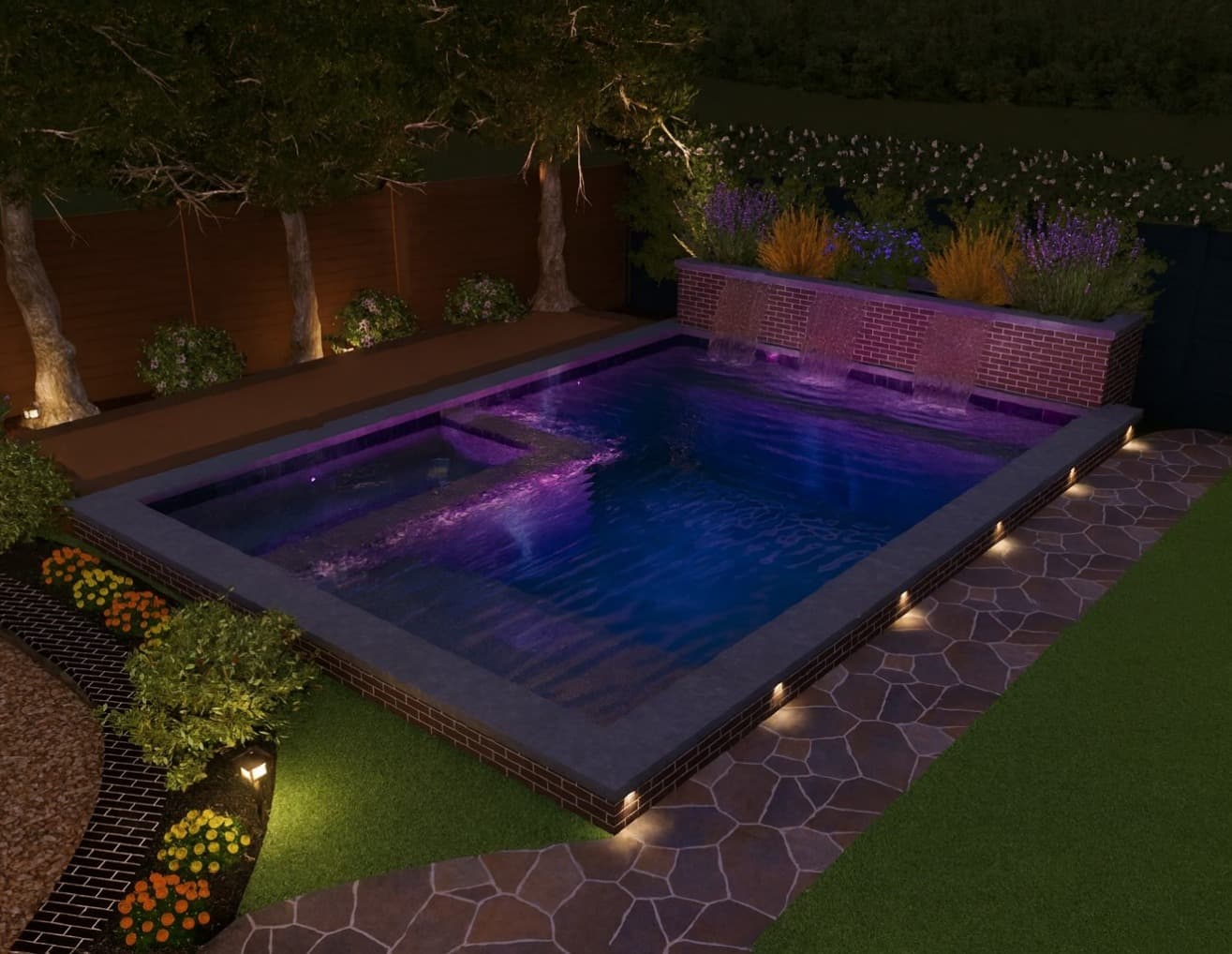
Ask any reputable pool builder what separates a pool that still looks flawless in thirty years from one that's cracking by year five, and the answer almost always comes back to one thing: the shell. At White Glove Construction, every custom pool we build starts with a shotcrete shell — and that's not a default, it's a deliberate engineering decision.
This guide is the definitive explanation of what shotcrete actually is, how it's applied, how it stacks up against the alternatives, and why it's the only structural method we trust for a pool that has to survive decades in Georgia's notoriously unforgiving clay soil.
What Is Shotcrete, Exactly?
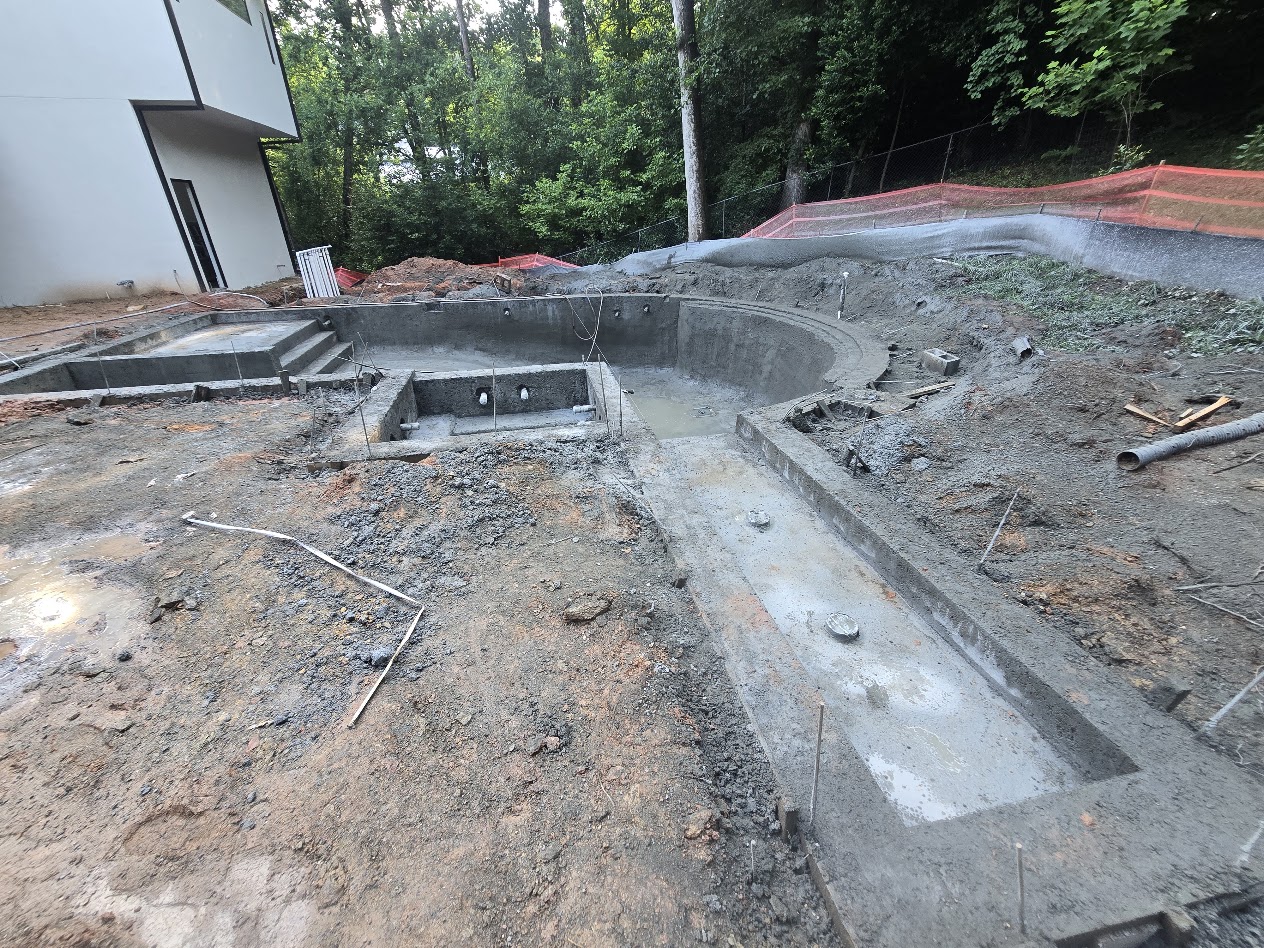
Shotcrete is concrete that's applied pneumatically — sprayed at high velocity through a hose and nozzle — rather than poured into forms. That single difference in application changes the entire character of the finished structure.
Because it's blasted into place under pressure, shotcrete compacts itself against the reinforcing steel and the excavated earth as it's applied. That high-velocity placement drives out air pockets and eliminates the voids and cold joints that can plague conventionally poured concrete. The result is a dense, monolithic shell — one continuous mass of steel-reinforced concrete with no seams for water to exploit.
Shotcrete vs. Gunite: Are They the Same Thing?
This is one of the most common points of confusion, so let's settle it. Both are pneumatically applied concrete, and the industry often uses the terms interchangeably. The technical difference is when the water is added:
- Gunite (dry-mix) — The dry cement-and-sand mixture travels through the hose and water is added at the nozzle by the operator.
- Shotcrete (wet-mix) — The concrete is batched with a precise water-to-cement ratio before it enters the hose, then sprayed.
Both produce excellent pool shells when applied by a skilled crew. The key in either case isn't the label — it's the consistency of the mix and the expertise of the nozzle operator. What matters most is a properly engineered, properly applied, properly cured shell.
It Starts With Steel, Not Concrete
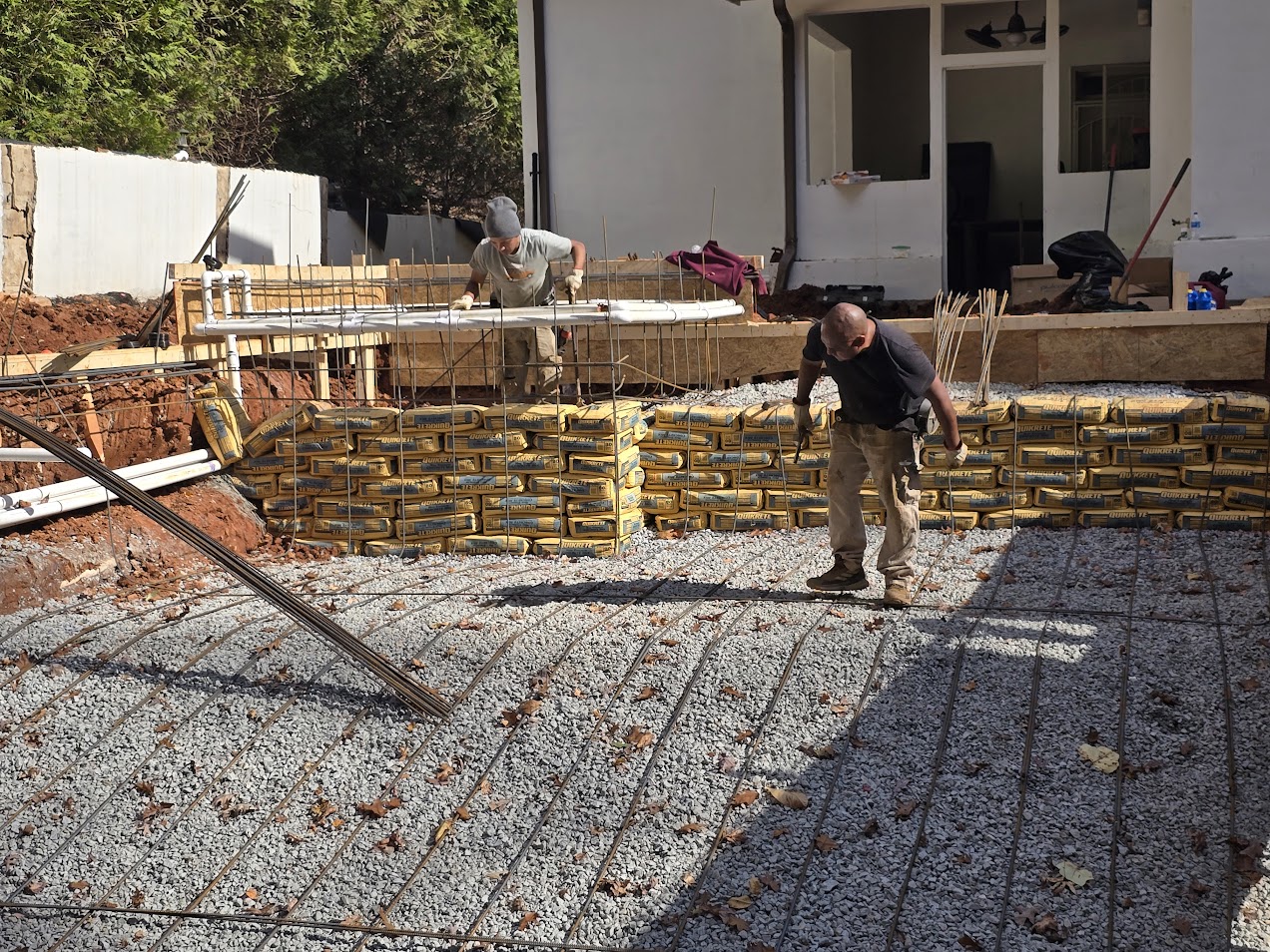
Here's the part homeowners rarely see: shotcrete is only as strong as the steel cage it surrounds. Before a single ounce of concrete is sprayed, the entire pool exists as a three-dimensional lattice of reinforcing steel — a rebar skeleton hand-tied to follow every wall, step, bench, and radius.
That cage is what gives the shell its tensile strength. Concrete is extraordinarily strong under compression but weak under tension; steel is exactly the opposite. Bond the two together and you get a composite structure that resists the relentless push-and-pull of hydrostatic pressure from the water inside and soil pressure from the earth outside.
Why This Matters So Much in Georgia
Georgia's red clay is expansive soil — it swells when it's wet and shrinks when it's dry, flexing against any structure buried in it throughout the year. Over seasons and decades, that constant movement is what cracks inferior pool shells and warps rigid, pre-formed structures.
A monolithic shotcrete shell over a properly engineered steel cage is built to absorb that movement. It's the single biggest reason we specify shotcrete for every Metro Atlanta project: our soil demands a structure that can flex and endure, and nothing does that better.
The Design Freedom Alternatives Can't Match
Shotcrete isn't just the most durable option — it's also the most creative. Because it's sprayed and then hand-troweled, it can take virtually any shape, depth, or contour imaginable:
- Vanishing (infinity) edges
- Raised spas and integrated spillways
- Sun shelves, tanning ledges, and beach entries
- Freeform curves and custom geometric shapes
- Benches, swim-outs, and grottos
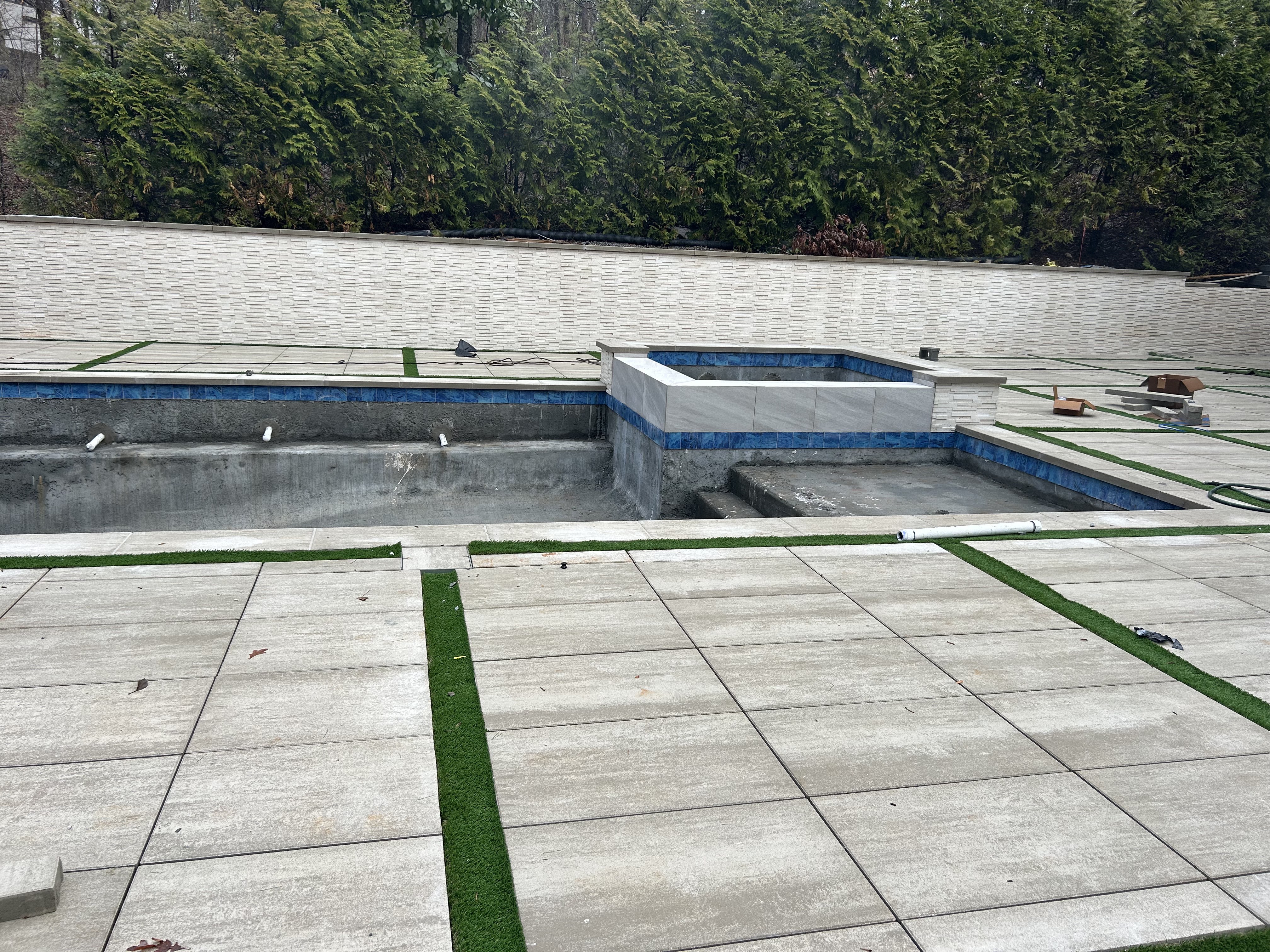
None of this is possible with a drop-in fiberglass shell locked to a factory mold, and it's far more limited with a vinyl liner. With shotcrete, if you can design it, a skilled crew can build it as one continuous structural element — then dress it in tile and finish once the shell has cured.
How Shotcrete Compares to Fiberglass and Vinyl
To understand why we build exclusively with shotcrete, it helps to see the trade-offs of the alternatives:
- Fiberglass — Fast to install and smooth-surfaced, but limited to factory shapes and sizes, and susceptible to shifting or "floating" in expansive clay if the surrounding soil and groundwater aren't perfectly managed.
- Vinyl liner — Lowest upfront cost, but the liner is a wear item that typically needs replacement every 7–12 years, and design options are limited.
- Shotcrete — Highest structural durability, unlimited design freedom, and the best long-term value, with an interior finish that can be refreshed periodically over a shell that lasts for decades.
For a homeowner making a generational investment in their backyard, shotcrete's combination of longevity and creative freedom is simply unmatched.
The Cure: The Quiet, Critical Final Step
Once the shell is shot and hand-carved, the most important — and most patient — phase begins: curing. Concrete doesn't "dry"; it hardens through a chemical reaction called hydration that requires moisture and time to reach full strength.
For the first several days after application, the shell is kept damp with regular water-downs so the concrete can develop its full design strength rather than curing too quickly and losing integrity at the surface. A properly cured shotcrete shell reaches compressive strengths far beyond anything the pool will experience in service — and that deliberate over-engineering is the margin that lets it shrug off decades of soil movement and water load.
Why White Glove Construction Builds With Shotcrete — Every Time
We don't offer fiberglass or vinyl pools, and that's intentional. Our entire reputation rests on building pools that stay beautiful and structurally sound for generations, and in Georgia's clay soil, shotcrete is the only method that delivers that with confidence. When you choose WGC, you're getting:
- A hand-tied, engineered steel cage built for our specific soil conditions
- A dense, monolithic shotcrete shell applied by experienced crews
- A properly managed cure that maximizes long-term strength
- The design freedom to build virtually any shape or feature you can imagine
The finished pool is what sells the dream. The shotcrete shell is what keeps that dream intact for decades. That's the promise beneath the surface of every pool we build.
Ready to build a pool engineered to last a generation?
Request A Design Consultation