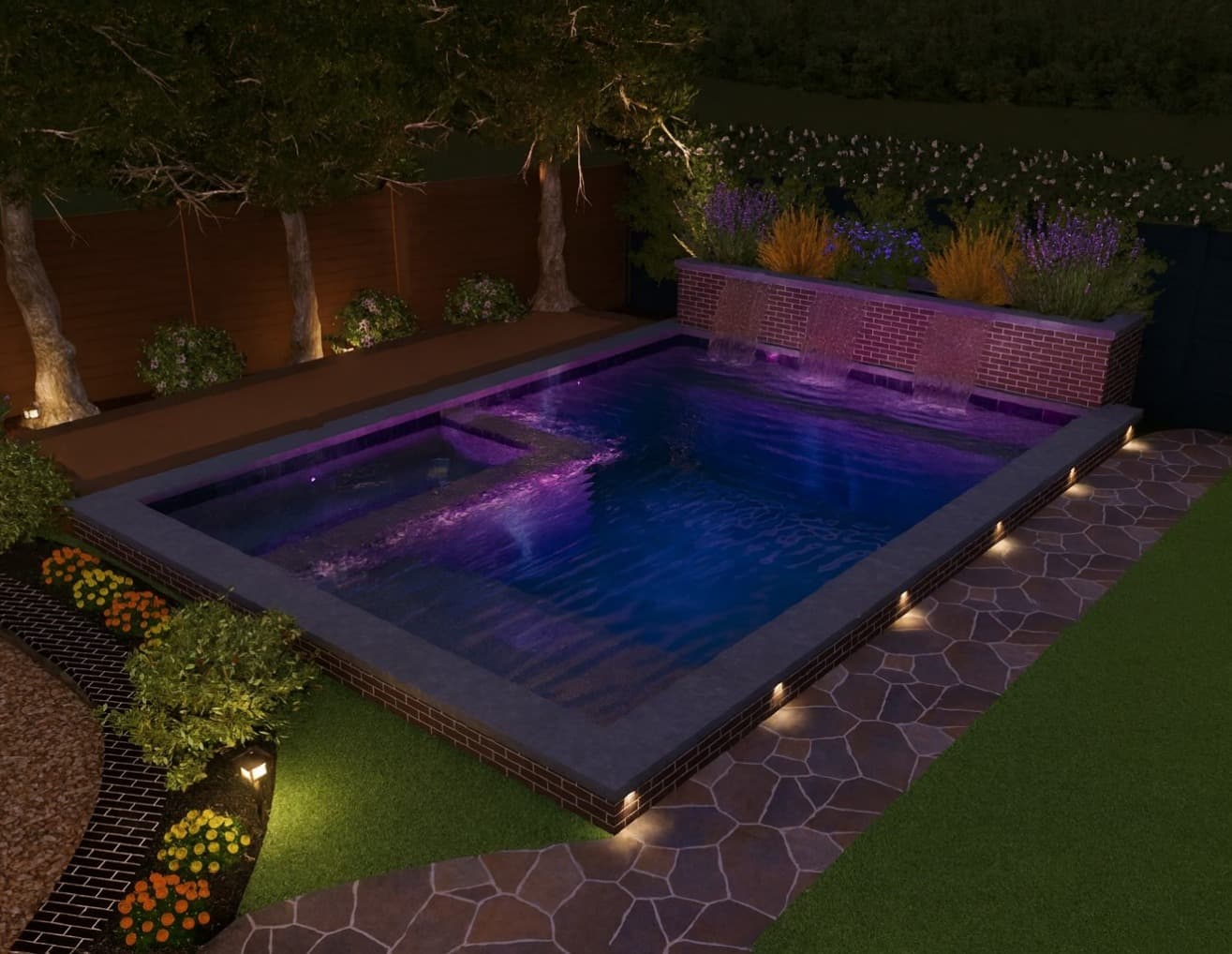
Homeowners spend months choosing a pool shape and finish, then treat the deck as an afterthought. That's backwards. Your deck is the largest visible surface in the entire project, the thing you actually stand on barefoot in July, and often the difference between a pool that looks custom and one that looks builder-grade.
Here's an honest comparison of the best pool deck materials for Georgia homes — on cost, heat, slip resistance, durability, and looks.
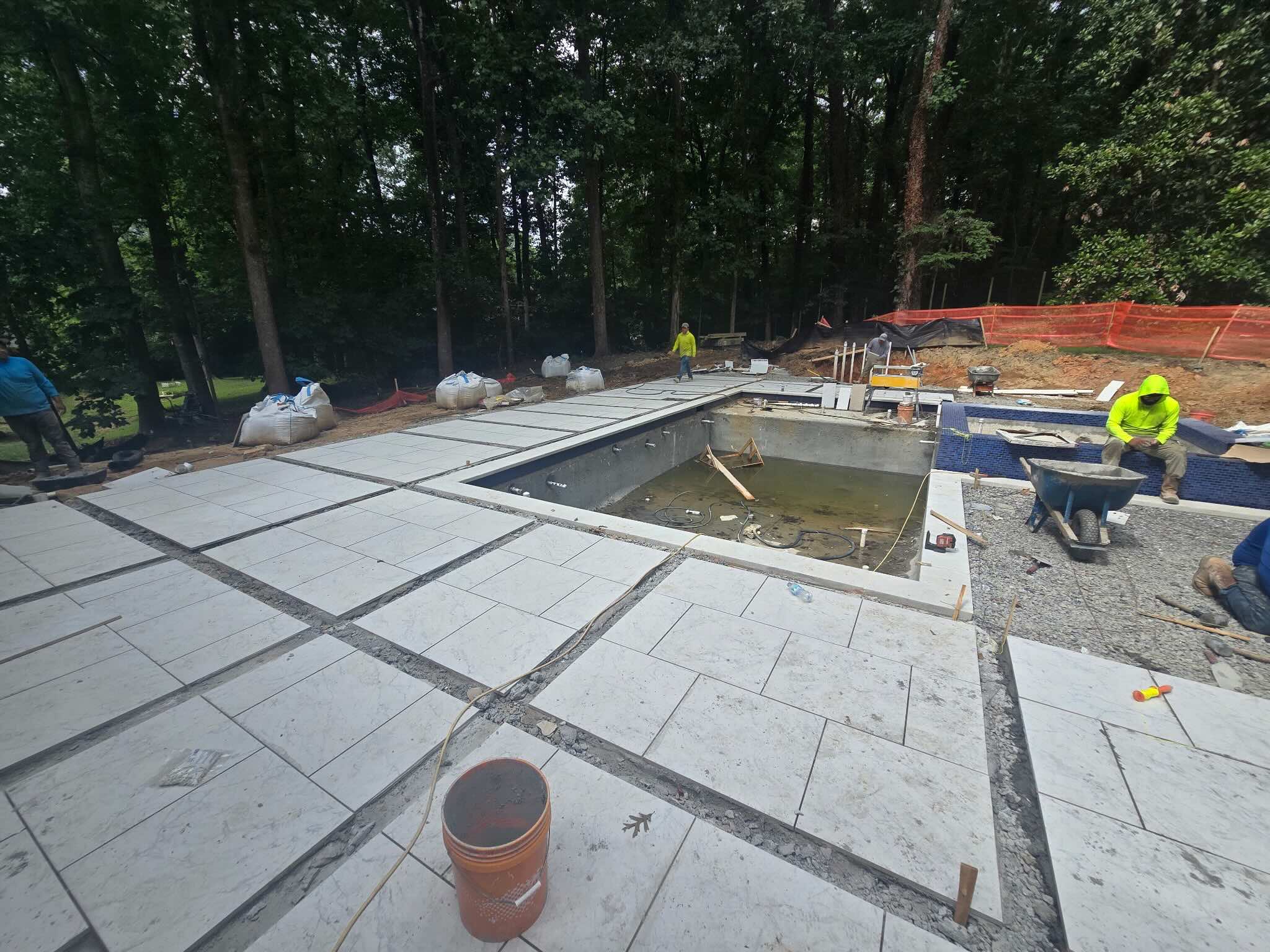
Cost Per Square Foot in Metro Atlanta
Installed 2026 ranges, including base prep:
- Broom-finished concrete: $8–$15/sq ft
- Stamped or decorative concrete: $14–$22/sq ft
- Travertine: $18–$30/sq ft
- Porcelain pavers: $18–$32/sq ft
- Premium natural stone (bluestone, flagstone): $25–$45+/sq ft
Because decks are large, material choice swings the budget substantially — a 900 sq ft deck can range from roughly $9,000 in concrete to $27,000 in travertine. Factor it in early. See how decking fits the total pool budget.
The Georgia Test: How Hot Does It Get?
This is the factor homeowners underestimate and then regret. An Atlanta deck in direct July sun can become genuinely painful to cross barefoot.
- Travertine — the standout. Its density and light color reflect heat instead of storing it.
- Light porcelain pavers — very good; color choice matters enormously.
- Light concrete — acceptable.
- Gray or dark concrete and dark stone — the hottest, and the most common complaint.
If you take one thing from this guide: go light in color, whatever material you choose.
Material-by-Material Breakdown
Travertine
A natural limestone with warm, organic tone variation. Pros: coolest underfoot, naturally slip-resistant, timeless high-end look, individually replaceable pieces. Cons: porous, so it needs periodic sealing and can stain from spills or organic debris if neglected. Best for classic, Mediterranean, and transitional designs — and the most popular premium choice in Atlanta.
Porcelain Pavers
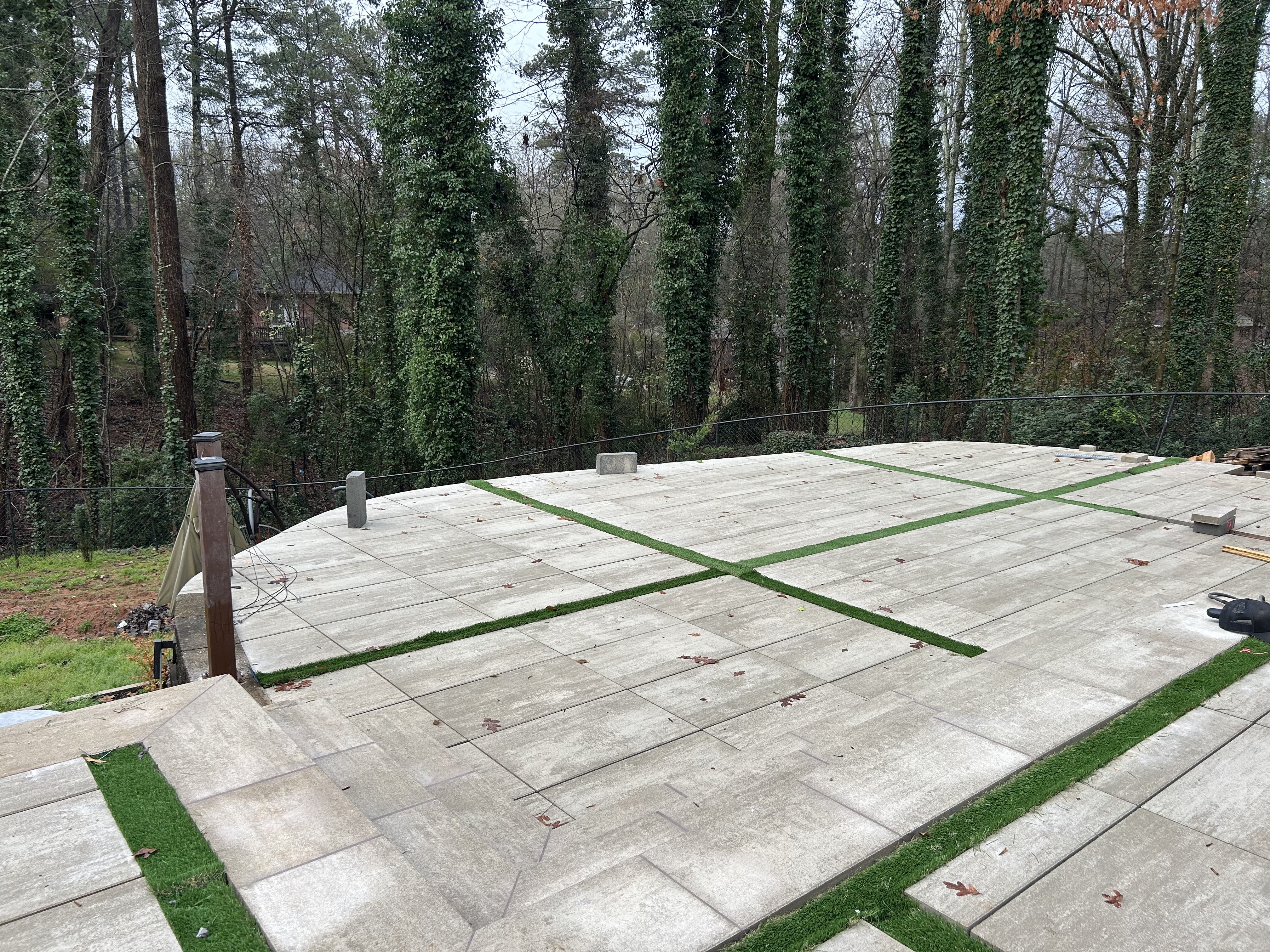
Engineered, through-body porcelain in large formats. Pros: nearly non-porous, excellent stain and scratch resistance, no sealing required, highly consistent color, available in convincing stone and wood looks. Cons: demands precise installation, and you must specify an outdoor wet-rated slip finish. Best for contemporary and modern designs.
Poured Concrete
The value benchmark. Pros: lowest cost, fast installation, broom finish gives decent traction, can be stamped or stained. Cons: Georgia's expansive clay soil makes cracking a real long-term risk, repairs are nearly impossible to hide, and standard gray gets very hot. Best when budget is the priority.
Premium Natural Stone
Bluestone, flagstone, and similar. Pros: unmatched character and a genuinely bespoke look. Cons: highest cost, requires sealing, and darker varieties get hot. Best for estate projects where the stone is a design statement.
Slip Resistance: Non-Negotiable
Wet feet on a hard surface is the core safety issue of any pool deck. Travertine, textured porcelain, and broom-finished concrete all provide good wet traction. Avoid polished stone and smooth glazed tile entirely. When specifying porcelain, confirm it's outdoor wet-rated rather than an indoor finish — a detail that's easy to get wrong and dangerous to overlook.
What Actually Determines Longevity
Here's the part material comparisons usually miss: base preparation and drainage matter more than the material itself. In Georgia's expansive clay, a premium travertine deck on a poorly compacted base will fail long before budget pavers installed correctly. Proper grading that moves water away from the pool and house, adequate compaction, and correct joint detailing are what buy you 25+ years.
Paver and travertine systems have a durability advantage worth knowing: individual pieces can be lifted and replaced. A cracked concrete slab generally can't be repaired invisibly.
Our Recommendation for Most Georgia Homes
For the balance of comfort, longevity, and resale appeal, light-colored travertine or porcelain pavers over a properly prepared base is the choice we make most often. Travertine when the design leans classic and barefoot comfort is the priority; porcelain when the design is contemporary or the family wants the lowest-maintenance surface available. Concrete remains a legitimate choice when budget leads — just go light in color and invest in the base. See these materials in finished projects.
Not sure which deck material fits your project?
We'll show you real installed samples and help you weigh heat, maintenance, and budget for your yard.